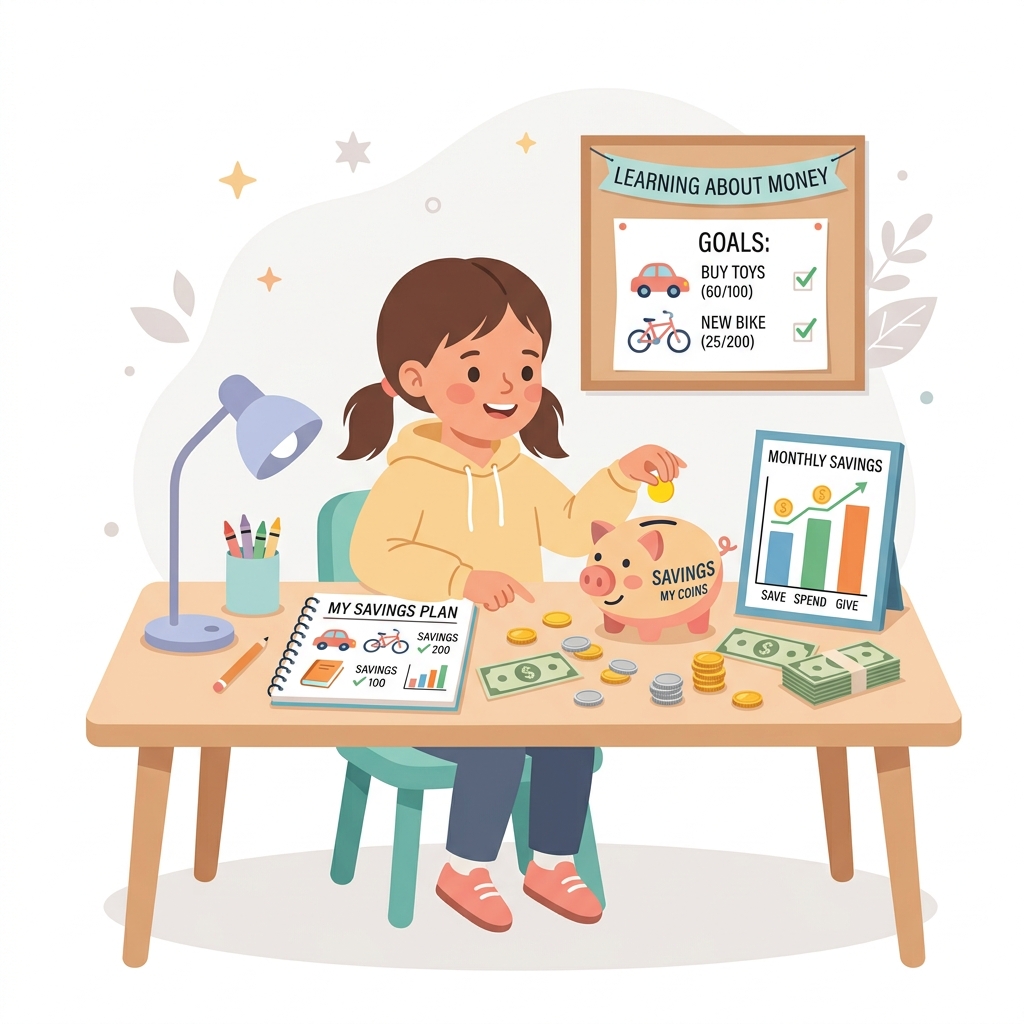
零用錢的心理學與理財課:從國小到國中如何透過零用錢建立孩子的自律與價值觀?
發表日期: 2026-05-25
作者: Kiddo Task 育兒科學團隊
在電子支付普及、數位貨幣充斥生活的今天,金錢在孩子眼中逐漸退化為手機螢幕上的數字,或是一次簡單的感應扣款。這種「看不見的金錢流動」讓現代兒童更難建立真實的財務觀念。許多家長常在考慮:該在什麼時候給孩子零用錢?要給多少?又該如何引導孩子合理花費?
其實,給予零用錢絕不是單純的物質滿足,而是一門極佳的自主生活與責任感訓練課。發展心理學的研究指出,零用錢是訓練兒童決策力、延遲滿足以及承擔選擇後果的絕佳教具。以下我們將結合兒童的階段認知發育,解析從國小低年級、高年級到國中階段給予零用錢的科學思路。
財務學與兒童心理學研究指出:「金錢是一項需要親自操作才能學會的技能。在父母的安全守護下經歷幾次『把零用錢花光而感到後悔』的體驗,比講述一百遍理財理論更能讓孩子學會自律。」
一、國小低年級(6-8 歲):實體觸覺與「三罐子儲蓄法」的啟蒙
國小低年級的孩子正處於具體思維階段,剛開始在學校學習基礎的數學加減法。此時,實體金錢的觸覺回饋對他們而言至關重要。家長在此階段可以開始給予小額的「週薪」,並以實體硬幣或紙鈔的形式發放。
我們建議家長引導孩子準備三個透明的罐子,分別貼上「消費」、「儲蓄」與「分享」的標籤:
- 消費罐(日常花費):可以用來購買想吃的小零食、貼紙等。這部分資金由孩子自己做主,家長應減少干涉。
- 儲蓄罐(長遠夢想):用來存放想購買較昂貴玩具或故事書的積蓄。當孩子看著罐子裡的錢慢慢增加,能具體感受到累積的力量。
- 分享罐(感恩與關懷):可以用來購買送給朋友的生日小卡片,或是參與學校的愛心捐款,培養感恩與關懷他人的共同體感覺。
透明罐子的設計能讓孩子用雙眼直接看見金錢的增減,這種即時的視覺回饋能顯著加深大腦對金錢價值的印象,是養成延遲滿足習慣的起點。
二、國小高年級(9-12 歲):週薪制、預算規劃與「安全的後悔體驗」
進入國小中高年級後,孩子的自主意識與社交圈逐漸擴大,他們開始有更多個人想要購買的特定文具、漫畫或卡牌。此時是訓練預算規劃與決策的最佳時機。
在此階段,我們建議繼續採用「週薪制」,但可以引導孩子使用簡單的記帳表,紀錄每週的收入與支出。家長可以將部分「非生活必需品」的購買決定權交給孩子,例如當孩子想要某款新玩具時,請他們自己用零用錢支付。
如果孩子在週一就把所有錢花光,導致週四時沒有錢買自己很想要的小卡片,家長請務必克制伸手援助的衝動。這種「因為衝動消費而感到後悔」的痛感,是孩子大腦前額葉發展預算規劃能力的寶貴養分。在家庭安全的環境中體驗這種後悔,能幫助他們在長大面對更大財務決定前,就學會權衡想要與需要。
三、國中階段(12-15 歲):月薪制、必需品外包與財務諮詢角色
國中生正逐步走向獨立與社會化,他們的消費場景也從文具店擴展到與同學聚餐、搭公車捷運以及購買個人配件。此時,零用錢的發放可以正式轉為與成人相似的「月薪制」。
家長可以嘗試進行「必需品外包」的財務練習,將部分原本由父母支付的必需支出(例如每月的悠遊卡車資、學校文具費用、假日與朋友的午餐費)納入零用錢總額中,交由孩子自主分配。
這項練習能強迫國中生學習在一個月的時間跨度內分配資金。這時,父母的角色應從嚴格監督的「看守人」,轉變為提供建議的「財務顧問」。如果孩子在月中就面臨資金短缺,可以與他們坐下來共同檢視記帳單,共同商討如何調整下個月的花費比例,這能建立起孩子真正的理財成熟度。
四、零用錢與家事的科學邊界
我們也常被問到:「做家事可以給零用錢嗎?」這與阿德勒心理學與行為習慣養成息息相關。我們強烈建議將日常家務明確劃分為兩大類型,以避免破壞孩子對家庭的責任感:
- 基本義務(無給薪):整理個人床鋪、收拾自己的玩具、把自己的餐具拿去洗等。這些是維持個人生活與身為家庭成員的本份,不應與金錢掛鉤。
- 額外貢獻(可給薪):擦全家的鞋子、掃全家的大廳、幫忙洗車等超出個人生活範圍的家事。這些才可以適度給予點數或零用錢作為勞動回報。
家長可以善用我們的 兒童家事與理財表,與孩子坐下來商量,設計一份雙方都同意的零用錢與家務分工表,讓孩子在日常勞動中體會收穫的喜悅,在負責與自主中健康成長。
The Psychology of Allowance: How to Teach Money Skills and Self-Discipline from Elementary to Middle School
Date: 2026-05-25
Author: Kiddo Task Pediatric Research Team
In today's digital era, where mobile payments and digital cards dominate our daily lives, money has become an abstract number on a screen. For children, this lack of physical money makes it difficult to understand the real value of currency. Many parents struggle with key financial education questions: When should I start giving an allowance? How much is appropriate? And how can I guide my child to make smart financial decisions without constant supervision?
In reality, giving a regular allowance is not just about meeting material wants. It is a powerful educational opportunity to build self-discipline, decision-making, and long-term planning skills. Studies in child development suggest that an allowance provides children with a safe way to practice choice, experience natural consequences, and develop healthy money habits. This article explores practical approaches to managing allowances from early elementary school through middle school.
"Money management is a practical skill that can only be mastered through active experience. Facing the natural consequence of running out of money teaches a child far more about self-discipline than abstract lectures ever could." (Pediatric Financial Education Group)
1. Early Elementary (Ages 6-8): Tactile Connection and the Three-Jar Strategy
Children in early elementary school are in a concrete stage of cognitive development. They are just starting to learn basic addition and subtraction at school. For these young minds, the physical feel of paper bills and coins is crucial. During this stage, parents should introduce a small, weekly allowance paid in physical currency.
We recommend helping your child set up three clear plastic jars, labeled with simple words:
- Spend: For small daily items, like snacks or stickers. The child has full control over this jar, and parents should avoid interfering with their choices.
- Save: Dedicated to long-term goals, like a special book or a larger toy. Watching the coins slowly stack up inside the jar provides immediate visual success.
- Give: Used for buying small birthday cards for friends or participating in charity events, helping the child feel connected to their community.
Using clear jars allows children to see their money grow or shrink. This concrete visual feedback helps their brains connect their decisions with physical outcomes, forming the baseline for delayed gratification.
2. Upper Elementary (Ages 9-12): Weekly Allowance and Safe Lessons in Regret
As children enter upper elementary school, their personal desires and social interactions expand. They start wanting specific school items, games, or books. This is the perfect time to teach basic budgeting and independent choice.
At this stage, we suggest keeping a weekly pay schedule but introducing a simple budget journal to track income and expenses. Parents can hand over the buying decisions for non-essential items to the child. If they want a new video game or accessory, they must save up and pay for it themselves.
If your child spends their entire weekly allowance on Monday and cannot join their friends for a small treat on Thursday, avoid stepping in to rescue them. The feeling of regret from an impulsive purchase is a powerful learning moment. Experiencing these small financial mistakes in a safe family environment teaches them to balance their needs and wants before they face larger financial decisions in adulthood.
3. Middle School (Ages 12-15): Monthly Allowance and Handing Over Responsibility
Middle school students are taking significant steps toward independence. Their daily spending habits now include eating out with peers, taking transit, and purchasing personal clothing or accessories. To prepare them for the real world, parents can shift the allowance to a monthly schedule, mimicking a regular salary.
We recommend a strategy of handing over real expenses. Parents can add the cost of monthly necessities (such as bus fares, school supplies, and weekend lunch budgets) directly to the monthly allowance. The student is then fully responsible for managing these funds throughout the entire month.
This exercise teaches teenagers how to pace their spending over a longer period. During this transition, the parent's role shifts from an active supervisor to a supportive financial advisor. If the teen runs out of money by mid-month, sit down together to review their spending journal without judgment, helping them adjust their habits for the following month.
4. Designing Clear Boundaries Between Chores and Allowance
A common question is: "Should children be paid for doing chores?" To prevent damaging their sense of family responsibility, we advise separating chores into two clear categories:
- Personal Responsibilities (Unpaid): Tasks like cleaning their own room, washing their own dishes, and packing their school backpack. These are baseline duties of being a family member and should never be tied to money.
- Family Contributions (Paid): Tasks that benefit the entire household, such as cleaning the main living room, washing the family car, or helping prepare dinner. These extra efforts can be rewarded with points or a small allowance.
Parents can use our customized Chore & Routine Chart to sit down with their child, design a mutual agreement, and print it out. This simple tool turns daily tasks into visual steps toward real-world responsibility and self-confidence.