用視覺化常規表建立蒙特梭利自律生活
發表日期: 2026-05-21
作者: Kiddo Task 育兒科學團隊
「出門前忘了拿水壺、回家後書包隨地亂丟、催促洗漱好幾遍才動彈……」在日常育兒生活中,這類令人煩惱的情景經常上演。許多家長可能覺得孩子是故意唱反調。然而,從兒童發展的角度來看,問題主要與大腦的認知特點有關。
幼兒的執行功能(包括工作記憶、時間管理與任務排序能力)尚未發育完全。當父母口頭給予一系列連貫命令時,孩子的大腦常因訊息過多而難以跟上。
蒙特梭利指出:「不要給孩子過多的口頭命令,而是要預備好一個秩序井然的環境。環境本身的秩序,會轉化為孩子內在的自律。」
一、科學原理:減少認知負荷與實體視覺線索輔助
認知負荷理論指出,工作記憶空間是有限的。如果孩子需要時常默記接下來該做的事,就較難集中精力去完成任務。
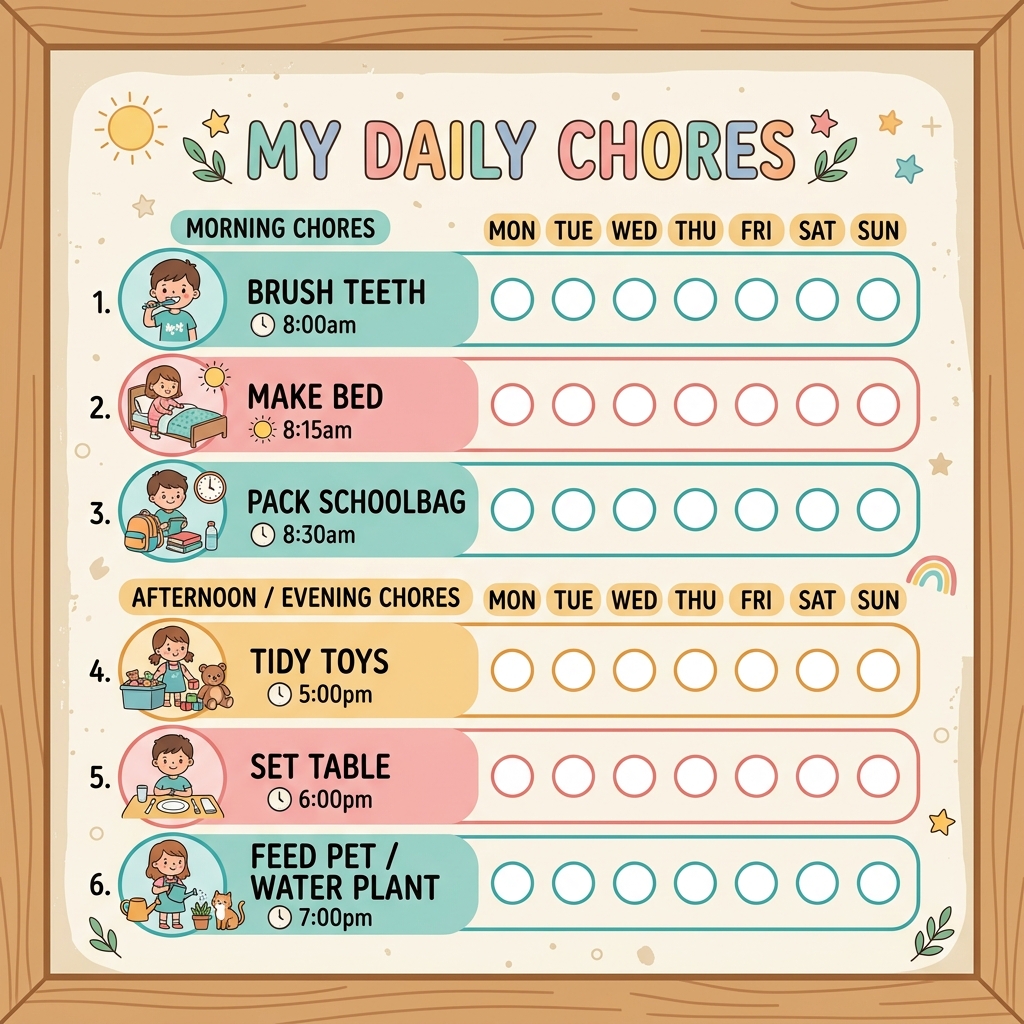
視覺化常規表(Visual Routine Chart)能為大腦提供實體的視覺線索。當孩子看到常規表上的圖標(例如刷牙或整理書包的圖示),視覺信號會直接觸發直覺反應,避開複雜的語言理解過程。這能引導孩子主動依照圖示完成任務,提高自主完成度。
二、自律環境的四個調整方向
在蒙特梭利日常教育中,培養自律主要依靠環境的預備,而非口頭訓誡或處罰。
- 配合孩子高度的物理配置:確保衣架、掛鉤、鞋櫃都在孩子伸手可及的高度。物品放得太高,孩子往往會直接放棄整理。
- 明確標記物品位置:使用簡明標籤在櫃子上標記「書包放這裡」、「水壺放這裡」。環境位置確定後,收納行為就容易自然發生。
- 與孩子共同制定規則:與孩子共同討論放學後要做的事情,例如「放學回家後,先做完哪三件事才可以安排遊戲時間」。孩子若參與制定,執行意願會更為明顯。
- 用實體教具代替口頭叮嚀:這也是我們設計生活常規卡與上學準備核對清單的想法。讓教具成為客觀的提醒工具,家長只需說:「去看看我們的核對清單還有哪一項未完成」,就能減少衝突。
三、實操引導:如何運用正向肯定與適當的激勵
引入自律表時,容易落入集點換玩具的物質獎勵。然而,心理學研究指出,過度的外部物質獎勵可能削弱孩子的自主積極性。
我們建議運用具體肯定與生活經驗的分享來進行引導:
- 肯定孩子的具體努力:當孩子完成常規表時,可以說:「我看到你今天一回家,就主動看著清單把便當盒拿出來洗,你對自己的事情非常負責。」這比空泛的讚美更能幫助孩子建立自信。
- 以親子時間代替物質誘惑:例如完成一週約定的常規,可以換取「週末多講一本故事書」或「親子活動時由你決定去哪裡玩」,用親密互動取代物質。
- 理解孩子需要時間適應:剛開始使用的階段,孩子漏掉某些步驟是正常的。不需急著責備,這是陪同他們查看清單、再次熟悉日常習慣的機會。
自律是成長中需要慢慢培養的能力。你可以前往我們的 生活管理教具專區,為孩子列印一份簡單清晰的常規表,從日常瑣事開始培養獨立的好習慣。
Building Montessori Self-Discipline with Visual Routine Charts
Date: 2026-05-21
Author: Kiddo Task Pediatric Research Team
"Did you bring your water bottle? Put your socks in the laundry! Where is your schoolbag?" For many parents, mornings and afternoons are filled with these constant reminders. It is easy to feel frustrated and think that children are simply ignoring our words or being difficult. However, child growth studies show a very different picture. The real issue lies in how a child's brain processes information.
A young child's executive functions—which include working memory, time tracking, and organizing tasks—are still in their early stages of growth. When we verbally give children a list of three or four instructions at once, their minds quickly become overloaded. In psychology, research on memory limits shows that working memory is a very small mental container. If a child has to spend all their energy trying to remember what to do next, they have no mental room left to actually do the task.
Montessori noted: "Do not give children too many verbal commands. Instead, prepare an orderly environment. The order in the environment translates into the child's inner self-discipline."
1. The Science: Using Visual Routine Charts to Support Daily Habits
This is where a visual routine chart becomes a valuable tool. A routine chart translates abstract verbal requests into physical, visual cues. When a child looks at a chart and sees a simple picture of a toothbrush, a schoolbag, or a water bottle, the brain instantly understands what is needed. The child does not need to translate parental words into actions; the visual signal does it for them.
This drastically lowers mental strain and turns chores into a simple, predictable sequence. Instead of feeling like they are being ordered around, children feel guided by an objective checklist. It shifts the daily experience from resisting commands to active, independent task completion.
2. Montessori Principles: 4 Tips for Preparing a Supportive Environment
In Montessori education, we do not teach self-discipline through lectures, strict rules, or continuous corrections. Instead, we teach it by preparing the environment. A well-prepared home allows children to do things for themselves, which naturally builds their confidence and order. Here are four practical ways to adjust your home environment today:
- Keep hooks and racks at child-height: Look at your entry hall from your child's eye level. Are the coat hooks and shoe racks too high? If a child has to struggle or ask for help just to hang up their coat, they will naturally avoid doing it. Placing low hooks and a small shoe bench makes tidying up an easy, independent task.
- Define a clear home for every object: Label storage baskets and shelves with simple pictures or words, like "Backpack Spot" or "Lunchbox Tray." When the physical space is highly predictable, children know exactly where items belong, making cleanup a natural part of their day.
- Create the daily sequence together: Sit down with your child during a quiet moment and map out their routine. You might ask, "When you walk in the door from school, what are the first three things we need to do before we can play?" By involving children in the planning, they feel a sense of ownership and are far more willing to follow the routine.
- Let physical tools replace parental nagging: This is the core philosophy behind our customized Chore Charts and School Checklists. Instead of constantly repeating "Go brush your teeth," you can simply say, "Let's check our routine chart together and see what is next." The tool becomes the reminder, which reduces power struggles between parent and child.
3. Guidance: Encouragement Without Toys
When introducing routine charts, many families fall into the trap of using sticker charts to hand out toys or candy. While this might work for a few days, studies in behavioral psychology show that large external rewards actually damage a child's natural interest in learning and helping. Once the prizes stop, the good habits often vanish.
To build real, lifelong self-discipline, we recommend focusing on connection and encouragement instead:
- Praise the specific effort, not the child: Avoid empty praise like "You are a perfect kid." Instead, describe what you see: "I noticed that you looked at your school checklist and put your water bottle in the sink without me asking. You are taking great care of your belongings." This specific feedback helps children understand the value of their hard work.
- Trade gifts for shared family experiences: Instead of buying a new toy when they complete their tasks for the week, offer a special connection activity. This could be a family board game night, an extra bedtime story, or letting the child choose the menu for weekend dinner. These shared moments reinforce positive habits while building strong relationships.
- Be patient with mistakes during transitions: Learning a new routine takes time. There will be days when your child forgets steps, loses focus, or feels tired. Instead of scolding them, treat these moments as opportunities to learn. You can say, "It looks like we missed something. Let's walk over to our routine chart together and see what our helper card says."
Self-discipline is an essential habit that develops over time. Visit our Routine & Chore Chart Section to print out a beautifully designed routine chart for free, helping your child take steps toward independence!